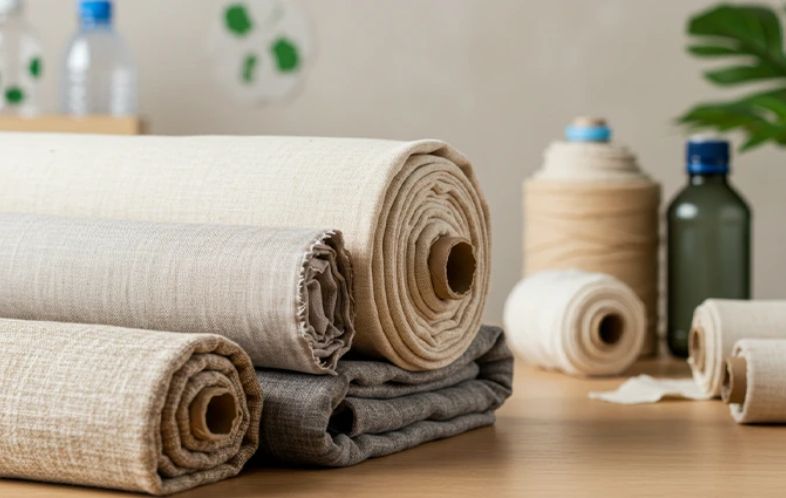
6 Examples of Recycled Textile Products Widely Used in Industries
Every year, the textile industry generates millions of tons of waste from both production processes and discarded products. However, advancements in textile recycling technology prove that this waste does not always have to end up in landfills. Various innovations allow textile waste to be reprocessed into new products that hold high economic value and offer tangible benefits across various industrial sectors.
From yarn to automotive materials, recycled textile products are increasingly used to support more sustainable production practices. Here are some examples.
1. Recycled Yarn
Turning waste into new raw materials
One of the most common products of textile recycling is recycled yarn. Fabric waste and textile production scraps are reprocessed into fibers, which are then spun into new yarn ready to be used in making various types of fabrics. Today, textile-to-textile recycling technology enables textile waste to be transformed into high-quality yarn suitable for fashion products, home textiles, and industrial needs. This process helps reduce dependency on virgin raw materials while supporting the concept of a circular economy.
2. Nonwoven Fabric
A practical solution for various industrial needs
Not all textile waste needs to be turned back into yarn. Many recycled fibers are processed into nonwoven fabric—a type of fabric produced without weaving or knitting. This material is widely utilized as industrial filters, protective layers, geotextiles, and supporting materials in various manufacturing processes. Because its production process is relatively efficient, nonwoven fabric has become one of the steadily growing applications of textile recycling.
3. Insulation Material
Leveraging fiber characteristics for energy efficiency
Textile fibers naturally possess the ability to absorb sound and help maintain room temperature. Therefore, recycled textile waste is widely used as insulation material for buildings and industrial applications. This material serves as sound dampeners, thermal insulation, and construction composite materials. Recent research and development also indicate that recycled textile fibers hold great potential as a more environmentally friendly alternative for insulation materials.
Read also: From Donation to Recycling: 7 Ways to Reduce Textile Waste
4. Automotive Textile Components
Supporting a more sustainable vehicle industry
The automotive industry is one of the largest consumers of recycled materials. Reprocessed textile fibers can be used to manufacture vehicle interior linings, sound dampeners, trunk liners, and car carpets. In addition to helping reduce waste, recycled materials offer a lighter weight, which can enhance vehicle efficiency. The use of recycled textiles in the automotive sector continues to rise in tandem with growing sustainability targets worldwide.
5. Home Furnishing Products
Adding value to textile waste
Textile waste can also be transformed into various home interior products, such as carpets, cushions, sofa upholstery, and filling materials for pillows and mattresses. Aside from reducing the volume of disposed waste, utilizing recycled fibers in home furnishing products helps create more sustainable items without compromising functionality and comfort.
6. Fashion and Apparel Products
The closest example to everyday life
When hearing the term textile recycling, many people immediately picture clothing. Indeed, the fashion industry is one of the most active sectors utilizing recycled fibers. Currently, various global brands have adopted polyester and recycled textile fibers to produce clothing, bags, and accessories. In fact, the latest technology allows polyester textile waste to be reprocessed into raw materials with quality equivalent to virgin materials.
The advancement of textile recycling technology proves that textile waste holds far greater potential than just becoming trash. From recycled yarn, nonwoven fabrics, insulation materials, and automotive components to home furnishing and fashion products, various recycled textile products have now become an essential part of the modern industrial supply chain.
As attention toward sustainability increases, the utilization of textile waste is expected to keep expanding, opening up new opportunities for the textile industry in the future.