Greenwashing in the Textile Industry: What Is It and How to Recognize It?
As sustainability issues receive growing attention, terms like eco-friendly, sustainable, and environmentally friendly are increasingly appearing across the textile industry. However, not all of these claims carry the same meaning or evidence. This is where understanding the concept of greenwashing becomes essential. Amidst the abundance of product choices and available information, you may have seen textile products that appear "greener" simply from their packaging, labels, or the wording used. In reality, that impression does not necessarily reflect the entire process behind the product.
Therefore, understanding greenwashing in the textile industry helps both us and you evaluate sustainability claims more critically—without prematurely dismissing every product carrying an eco-friendly message as greenwashing.
What Is Greenwashing?
When eco-friendly claims do not match reality
Greenwashing is the practice where a company or product conveys a more environmentally friendly image than its actual condition. This can occur through overly broad claims, incomplete information, or label usage that leads consumers to believe a product offers greater environmental benefits than can actually be proven.
For instance, terms like "eco-friendly" or "green" are often used without specifying which environmental aspect is being addressed or what supporting evidence exists. The Federal Trade Commission (FTC) in the United States also warns that broad environmental claims lacking specific details are difficult to substantiate.
Why does greenwashing need attention?
Greenwashing makes it challenging for consumers to distinguish between sustainability claims backed by genuine evidence and those used merely as marketing strategies.
This has also drawn concern at the policy level. The European Commission, for example, noted that a portion of circulating environmental claims can be vague, misleading, or lack adequate supporting evidence.
Greenwashing in the Textile Industry
Many aspects can form the basis of a claim
The textile industry has a long production chain—ranging from raw materials, spinning, weaving or knitting, dyeing, and finishing, to the final product. Consequently, when a textile product is labeled sustainable or eco-friendly, it is important to identify which specific aspect is actually being referred to.
For example, a product might use a portion of recycled materials. However, that claim should not be immediately interpreted to mean that the entire product or its manufacturing process has a low environmental impact.
Specific information helps consumers interpret claims more accurately. The FTC also emphasizes the importance of clearly explaining when a product uses only a certain percentage of recycled material.
Labels and certifications also require attention
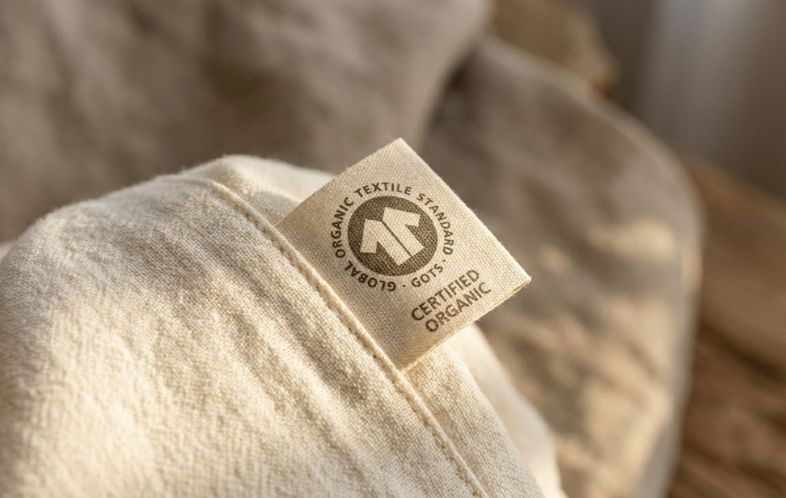
Certifications offer a way to provide more measurable information, yet consumers still need to understand what a certification actually verifies.
As an example, OEKO-TEX STANDARD 100 focuses on testing textiles for harmful substances. Products bearing this label have undergone testing based on established criteria, covering more than 1,000 harmful substances included in its test catalog.
As an illustration of its application in the industry, Danar Mas Group—a yarn and fabric manufacturer based in Bandung—has also earned the OEKO-TEX STANDARD 100 certification to ensure its products meet these human-ecological requirements.
This means the certification provides specific information regarding textile safety aspects, rather than automatically serving as a claim that the entire product carries a low environmental impact. Understanding the scope of such certifications is critical so that the information consumers receive is not misunderstood.
Read also: Gen Z Chooses Sustainable Fashion Beyond Just the Environment, Here Is Why!
How to Recognize Greenwashing?
Watch out for overly broad claims
When encountering claims like "100% eco-friendly", "green product", or "sustainable", try to look for more specific explanations. What actually makes the product environmentally friendly? Is there data, a standard, or a certification supporting it?
A good claim should help consumers understand what is being done, how significant the benefits are, and how the claim can be verified.
Do not look at just a single aspect
A single positive characteristic does not always reflect the whole production process. Therefore, it is essential to review information more comprehensively rather than jumping to conclusions that a product is definitely sustainable just because it carries one label or uses a specific type of material.
Why Is Transparency Important in the Textile Industry?
Clear claims build trust
For the textile industry, transparency is not just about following sustainability trends, but also about helping consumers understand products better. The more specific the information provided, the easier it becomes for consumers to assess a claim objectively.
In the end, avoiding greenwashing in the textile industry does not mean avoiding all eco-friendly claims. Rather, we need to habituate ourselves to looking at the evidence, context, and standards behind every claim.
Which aspect do you think is most important to consider when evaluating sustainability claims on textile products?