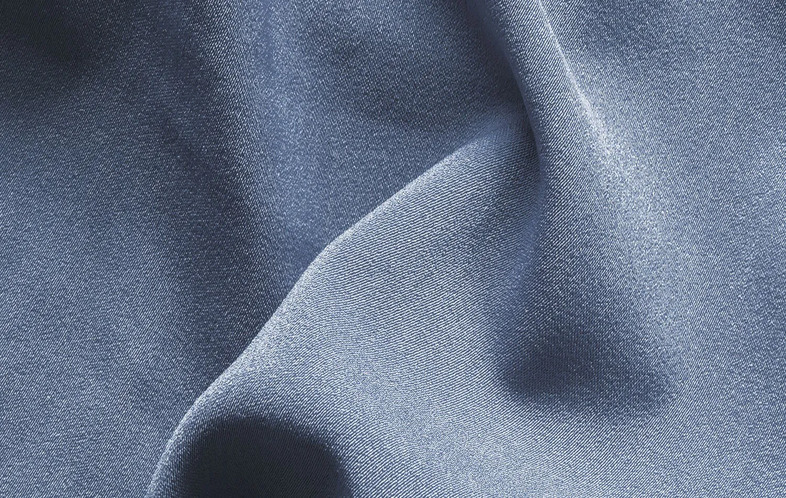
Why Clothes with Polyester Blends Don’t Stretch Out Easily? Here’s the Secret
Have you ever owned a piece of clothing that still looks neat even after being worn and washed multiple times? Meanwhile, other garments quickly stretch out and lose their shape after just a few uses. One of the key “secrets” behind a garment’s shape retention is the use of polyester blends in the fabric.
In the modern textile industry, polyester is often combined with other fibers such as cotton or rayon to enhance strength, shape stability, and overall durability. It’s no surprise that many manufacturers choose this material to create garments that are more long-lasting and resistant to stretching.
What Is Polyester and Why Is It Commonly Used in Clothing?
A strong and stable synthetic fiber
Polyester is a synthetic fiber made from petroleum-based polymers and is known for its high tensile strength and excellent resistance to stress and abrasion. Its molecular structure consists of tightly packed long chains, making the fiber strong and dimensionally stable.
These characteristics allow polyester to maintain fabric shape longer compared to many natural fibers.
Widely used in fabric blends
In textiles, polyester is rarely used on its own. More commonly, it is blended with other materials like cotton to create fabrics that balance comfort, strength, and shape retention.
This combination also helps offset the weaknesses of each fiber. For example, cotton is comfortable and breathable but tends to stretch out more easily. When blended with polyester, the fabric becomes more stable and less prone to losing its shape.
Why Do Polyester Blends Prevent Clothes from Stretching?
Fiber structure that resists deformation
One of the main reasons why polyester-blend clothing does not stretch out easily is due to polyester’s naturally low elasticity combined with high dimensional stability. This means the fibers do not easily deform or elongate under stress.
When the fabric is pulled during wear, polyester fibers help maintain the structure of the fabric, preventing the garment from becoming loose or “baggy.”
Ability to return to its original shape
Although not as elastic as spandex, polyester has excellent shape retention. After experiencing light tension or pressure, the fibers tend to return close to their original form.
This is why clothing made with polyester blends continues to look neat even after frequent use.
Resistant to washing and heat
In addition to resisting stretch during wear, polyester is also highly resistant to shrinkage and size changes during washing. The fiber does not absorb much water and has strong dimensional stability, allowing garments to maintain consistent sizing even after repeated laundering.
This is especially important for manufacturers, as it helps maintain product quality over time.
Advantages of Polyester Blends in the Textile Industry
More durable and long-lasting clothing
Polyester is known for its high resistance to friction and tension, making fabrics less likely to tear or lose shape.
That’s why it is commonly used in various types of clothing such as:
- Everyday t-shirts
- Work uniforms
- Sportswear
- Jackets and outdoor apparel
Easier maintenance
Clothing made with polyester blends is typically:
- Wrinkle-resistant
- Quick-drying after washing
- Less prone to shrinking
These qualities make it a popular choice for consumers who want practical and long-lasting garments.
Keeps garments looking neat
One of polyester’s biggest advantages is its ability to maintain fabric shape over time. Even after repeated wear and washing, garments remain neat and do not significantly change in size.
This is why many fashion brands and textile manufacturers rely on polyester blends in modern clothing design.
So, why don’t clothes with polyester blends stretch out easily? The answer lies in the strong, stable, and shape-resistant structure of polyester fibers. These fibers help maintain fabric dimensions, improve durability, and keep garments looking neat even after long-term use.
By combining polyester with other fibers like cotton, textile manufacturers can create fabrics that are not only comfortable to wear but also strong and long-lasting.