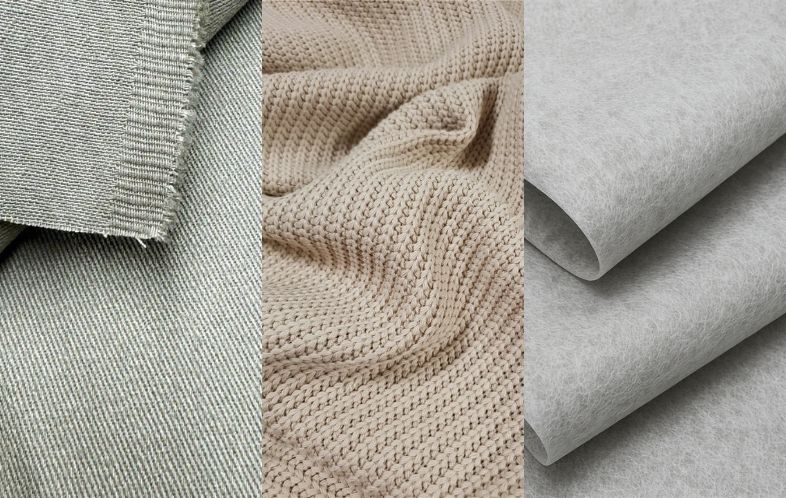
Types of Woven, Knitted, and Non-Woven Fabrics: Differences, Advantages, and Applications
Before selecting a fabric type for your textile products—whether for apparel, bags, or medical applications—it is essential to understand the differences between woven, knitted, and non-woven fabrics. Each fabric type has distinct characteristics that affect functionality, comfort, durability, and cost.
In this article, we provide a clear and practical explanation to help you make more informed decisions.
What Are Woven, Knitted, and Non-Woven Fabrics?
Woven Fabric
Woven fabric is produced by interlacing two sets of yarns—warp and weft—at right angles. This structure creates a firm texture with a uniform pattern, making woven fabrics suitable for products that require strength and long-term durability.
Knitted Fabric
Knitted fabric is formed from interlocking loops of yarn, resulting in a fabric that is elastic and comfortable. This looping technique gives knitted fabrics excellent flexibility and breathability, making them ideal for garments that require ease of movement.
Non-Woven Fabric
Unlike woven and knitted fabrics, non-woven fabrics are made by bonding fibers together mechanically, thermally, or chemically, without weaving or knitting processes. The result is a lightweight and thin material commonly used for disposable or highly functional products.
Differences Between Woven, Knitted, and Non-Woven Fabrics
1. Structure and Production Process
Woven Fabric
Yarns are interlaced on a weaving loom
Produces a stable and strong fabric structure that maintains its shape well
Knitted Fabric
Constructed through interlocking yarn loops, allowing stretchability
Typically produced using knitting machines
Non-Woven Fabric
Fibers are bonded without weaving or knitting
Production processes are relatively faster and more cost-efficient
2. Advantages of Each Fabric Type
Woven Fabric
Durable and strong
Excellent shape retention, minimal stretching
Suitable for formal wear, bags, and textile furnishings
An ideal choice for products requiring a neat structure and high durability
Knitted Fabric
Elastic and comfortable to wear
Good air permeability, suitable for daily use
Flexible and ideal for activewear and casualwear
Commonly used for T-shirts, sweaters, leggings, and sportswear
Non-Woven Fabric
Lightweight and cost-effective to produce
Offers various functional properties such as filtration and liquid barriers
Ideal for disposable or specialized applications
Common examples include masks, medical products, tissues, and geotextiles
Applications in the Textile Industry
Woven Fabric Applications
Jeans, shirts, jackets
Curtains and upholstery
Heavy-duty bags such as woven polypropylene bags
Woven fabrics are widely chosen when strength and a professional appearance are the primary requirements.
Knitted Fabric Applications
T-shirts, socks, sportswear
Knitted sweaters and innerwear
Due to their elasticity, knitted fabrics are highly user-friendly for garments designed to follow body contours.
Non-Woven Fabric Applications
Medical products (masks, aprons)
Hygiene products (tissues, diapers)
Air and water filtration materials
Non-woven fabrics are popular in healthcare and hygiene industries due to their production efficiency and specialized functionality.
Tips for Choosing the Right Fabric
| Consideration | Woven Fabric | Knitted Fabric | Non-Woven Fabric |
|---|---|---|---|
| Durability | High | Medium | Low–Medium |
| Stretchability | Low | High | Low |
| Comfort | Medium | High | Medium |
| Production Cost | Medium | Medium | Relatively Low |
| Common Applications | Formal wear, bags, upholstery | Casual wear, sportswear | Medical, hygiene, filtration |
Pro tip: For garments that are frequently worn and require durability, woven or knitted fabrics are recommended. For specific or disposable needs, non-woven fabrics are often the most efficient solution.
Understanding the differences between woven, knitted, and non-woven fabrics helps you select the right textile material based on functionality, comfort, and budget:
Woven fabrics: Strong and structured
Knitted fabrics: Elastic and comfortable
Non-woven fabrics: Economical and functional
Each fabric type plays an important role in the textile industry—from fashion and medical applications to packaging and industrial uses.