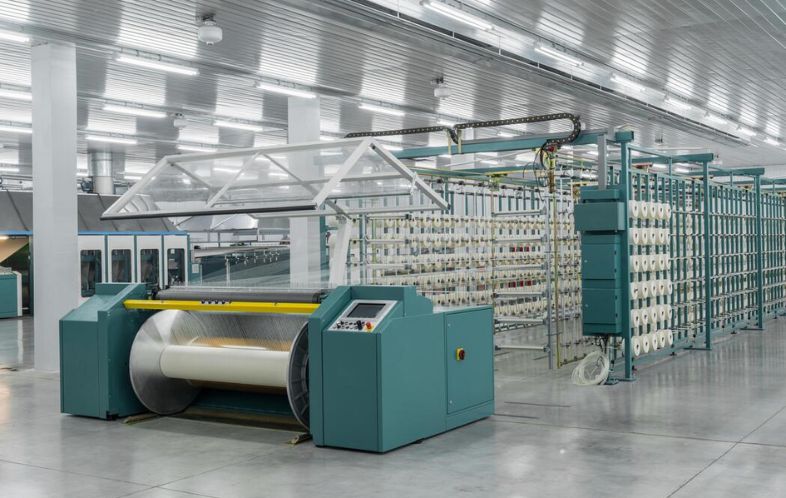
What is the Warping Process? A Crucial Stage that Determines Woven Fabric Quality
The warping process is a preparation stage for warp yarn where a large number of yarns are arranged parallelly and wound onto a warp beam. Its main purpose is to ensure that every single yarn has uniform length, order, and tension before entering the weaving process.
In woven fabric production, the number of warp yarns can reach hundreds or even thousands of strands. Therefore, the warping process is required to organize all these yarns neatly so they can run smoothly throughout the weaving process.
Why is the Warping Process Crucial?
Warping is more than just a yarn-winding process. This stage plays a major role in determining production efficiency and the quality of the resulting fabric.
Maintaining uniform yarn tension
Each yarn must have relatively identical tension to prevent issues during the weaving process. Differences in tension can cause yarn to break easily or result in an inconsistent fabric structure.
Reducing the risk of fabric defects
Properly arranged yarns help reduce various production defects, such as uneven lines, tangled yarn, and fabric construction imbalances.
Increasing production efficiency
A precisely executed warping process minimizes disruptions during weaving, maintaining optimal weaving loom productivity and reducing production downtime.
How are the Stages of the Warping Process Performed?
In general, the warping process consists of several interconnected main stages.
Yarn preparation on the creel
Yarns are first placed on a specialized rack called a creel. This setup allows multiple yarn packages to be pulled simultaneously toward the warping machine.
Yarn drawing and arrangement
Each strand of yarn is guided through a specific path to ensure they are arranged parallelly according to the construction requirements of the fabric being produced.
Read also: Compact vs Non-Compact Yarn: What's the Difference and Which is Better for Fabric?
Yarn tension control
At this stage, yarn tension is monitored and controlled to maintain consistency during the winding process. Proper adjustment is vital to avoid variation in characteristics between yarns.
Winding onto the warp beam
Once neatly arranged, all the yarns are wound onto a warp beam at a specific density. This beam is what will be used in the subsequent weaving process.
Types of Warping Processes in the Textile Industry
The choice of warping method is usually tailored to the fabric type and production requirements.
Direct warping
In the direct warping method, yarns from various packages are wound directly onto a warper beam without being divided into sections. This method is widely used for mass production because it is faster and more efficient.
Sectional warping
In sectional warping, yarns are wound into several sections first before being transferred to the final beam. This method is generally used for patterned fabrics, colored yarns, or constructions that require more complex yarn arrangements.
The warping process is one of the most critical stages in woven fabric production. Through this process, warp yarns are systematically arranged and wound to ensure uniform tension, making them ready for the weaving process. A well-executed warping process not only helps boost production efficiency but also contributes to a more consistent, defect-free fabric quality.
If you require high-quality textile products for various industrial or business needs, do not hesitate to contact Danar Mas Group. We are ready to help you find the best textile solutions tailored to your requirements.