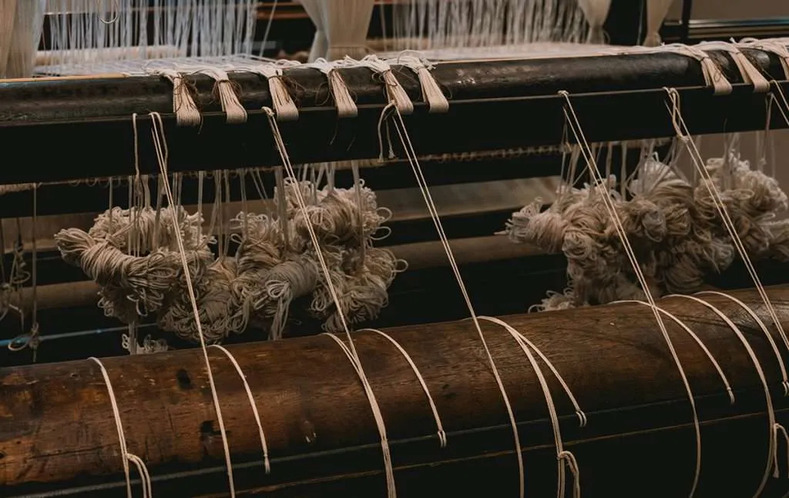
Shuttle Loom: Definition, Working Mechanism, and Its Role in the Modern Textile Industry
Amid the rapid advancement of technology in the textile industry, many modern machines have emerged with high speed and efficiency. Interestingly, not all industry players have fully transitioned to these new technologies. Some still choose to retain classic machines like the shuttle loom to preserve a distinct character in their products.
This phenomenon shows that in the textile industry, innovation does not always mean abandoning the old—it often means combining technologies based on specific production needs.
What Is a Shuttle Loom?
A shuttle loom is a type of weaving machine that uses a device called a shuttle to carry the weft yarn back and forth through the warp yarn to form fabric.
In the textile production process, weaving is a crucial stage after yarn spinning. This is where the shuttle loom plays its role as a conventional weaving technology that has been used for decades and continues to be part of production systems today.
Characteristics of a Shuttle Loom
Shuttle looms have several defining features that distinguish them from modern machines:
- Uses a physical shuttle that moves back and forth
- Relatively slower production speed
- Produces clean fabric edges (selvedge)
- Creates a denser and stronger fabric structure
These characteristics make shuttle looms a preferred choice for textile production that prioritizes quality over quantity.
How a Shuttle Loom Works
Understanding how this machine works helps you better appreciate every inch of fabric it produces. The process involves several precisely synchronized stages:
- Shedding: The warp yarns are separated upward and downward to create an opening (shed).
- Picking: This is the defining feature. A shuttle carrying the weft yarn passes through the shed from one side to the other.
- Beating-up: The reed pushes the newly inserted weft yarn into place, tightening it against the formed fabric.
- Taking-up & Letting-off: The finished fabric is rolled up while new warp yarn is gradually released.
Read also: Rarely Discussed Facts About Air Jet Looms That Textile Factories Should Know
The Role of Shuttle Looms in the Modern Textile Industry
Why Are Shuttle Looms Still Used?
Despite the rapid development of shuttleless looms, shuttle looms are still widely used for several reasons:
- Selvedge denim production: For the denim industry, this machine is essential. It produces tightly woven edges that do not fray, symbolizing quality and exclusivity.
- Unique fabric texture: Due to its slower operation, the yarn experiences less tension, resulting in a softer fabric with a distinctive hand-feel.
- Durability and longevity: Shuttle looms are known for their durability. Many well-known textile manufacturers still operate decades-old machines that are well-maintained to produce limited collections.
The slower production speed actually allows for greater control over the final output, which is why many industry players continue to rely on it for specific needs.
In today’s textile industry, market demand is not only focused on quantity but also on product differentiation. Shuttle looms remain relevant for:
- Premium textile production
- Small to medium-scale manufacturing
- Brands that emphasize craftsmanship and quality
With the growing demand for high-quality products, shuttle looms have become a strategic solution for creating added value in a competitive market.
For those involved in the textile industry, understanding shuttle looms can help determine the right production strategy—whether focusing on efficiency or product differentiation.
For the best textile product solutions, please contact Danar Mas Group to find the right fit for your needs.