The Secret Behind Quality Fabric: The Role of Cotton Quality in Textile Production
Behind a fabric that feels smooth, strong, and comfortable to wear, there is one important factor that is often unseen: cotton quality. Many textile industry players focus on the production or finishing processes, even though the quality of raw materials is actually the main determinant from the start. As a business owner, understanding the influence of cotton quality in textile production is not just about product quality, but also about efficiency, consistency, and the sustainability of your business.
What Makes Cotton Quality Vary?
Fiber length (staple length)
Longer cotton fibers produce yarn that is finer, stronger, and less prone to pilling. This is why Extra Long Staple (ELS) cotton types, such as Egyptian Cotton, are the primary choice for premium textile products. Based on recent data, the ELS segment dominated the global cotton fiber market with a 32.6% share in 2026, a figure that reflects how high market demand is for the best fiber quality.Fiber fineness (micronaire)
Micronaire measures how fine and mature cotton fibers are. The ideal value produces fabric that is soft on the skin, not stiff, and comfortable for long-term wear—a factor highly prioritized in the production of daily clothing and home textiles.Fiber strength and uniformity
Strong and uniform fibers ensure the spinning process runs smoothly, resulting in lower yarn breakage rates and making the final product more resistant to repeated use and washing. Conversely, fiber inconsistency is a hidden source of waste on the production floor.
How Does Cotton Quality Affect Final Textile Products?
Cotton entering the factory goes through many stages: cleaning, spinning into yarn, weaving or knitting into fabric, dyeing, and finishing. At every stage, the quality of the initial raw material will always affect each process.
The Secret Behind Quality Fabric: The Role of Cotton Quality in Textile Production
Behind a fabric that feels smooth, strong, and comfortable to wear, there is one important factor that is often unseen: cotton quality. Many textile industry players focus on the production or finishing processes, even though the quality of raw materials is actually the main determinant from the start.
As a business owner, understanding the influence of cotton quality in textile production is not just about product quality, but also about efficiency, consistency, and the sustainability of your business.
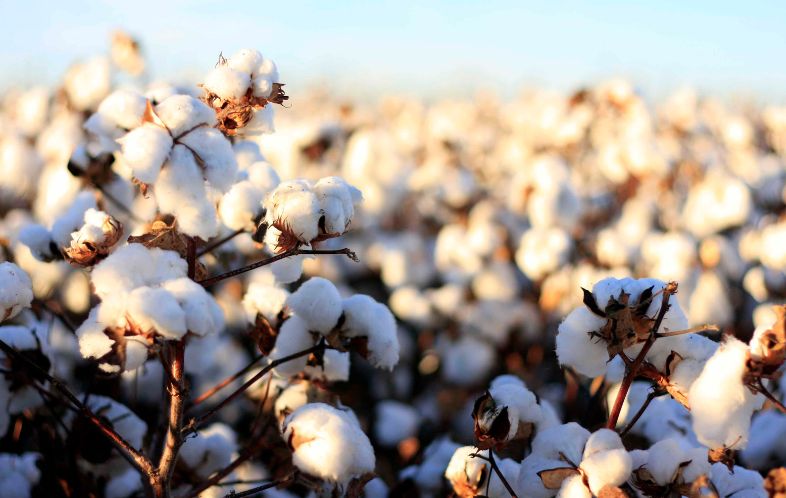
Image source: Britannica
What Makes Cotton Quality Vary?
Fiber length (staple length)
Longer cotton fibers produce yarn that is finer, stronger, and less prone to pilling. This is why Extra Long Staple (ELS) cotton types, such as Egyptian Cotton, are the primary choice for premium textile products. Based on recent data, the ELS segment dominated the global cotton fiber market with a 32.6% share in 2026, a figure that reflects how high market demand is for the best fiber quality.
Fiber fineness (micronaire)
Micronaire measures how fine and mature cotton fibers are. The ideal value produces fabric that is soft on the skin, not stiff, and comfortable for long-term wear—a factor highly prioritized in the production of daily clothing and home textiles.
Fiber strength and uniformity
Strong and uniform fibers ensure the spinning process runs smoothly, resulting in lower yarn breakage rates and making the final product more resistant to repeated use and washing. Conversely, fiber inconsistency is a hidden source of waste on the production floor.
Cotton cleanliness and color
Cotton containing excessive impurities, leaf fragments, dust, or seed remnants complicates the production process and increases waste. Meanwhile, inconsistent cotton color has a direct impact on fabric dyeing results, especially for bright-colored or white products.
Image source: Ryusei
How Does Cotton Quality Affect Final Textile Products?
Cotton entering the factory goes through many stages: cleaning, spinning into yarn, weaving or knitting into fabric, dyeing, and finishing. At every stage, the quality of the initial raw material will always affect each process.
| Cotton quality | Impact on final product |
| Long & fine fibers | Soft, luxurious, durable fabric |
| Short & non-uniform fibers | Fuzzy surface, wears out quickly |
| High impurities | Defective products, uneven dyeing |
| High fiber strength | Wash-resistant and suitable for intensive use |
For consumers, this is about comfort. But for textile business owners, this is about reputation, efficiency, and contract continuity.
The Impact of Cotton Quality in the Textile Business World (B2B)
As a technical standard
In B2B transactions, buyers do not just ask for "good cotton." They set measurable technical specifications: micronaire value, minimum fiber length, trash content limits, and moisture levels, all verified using HVI (High Volume Instrument) tools, which are a global industry standard. Cotton that does not meet these specifications risks being returned, discounted, or even leading to the termination of long-term contracts.Low price doesn't mean more cost-effective
This is a common trap. Cotton with a lower price is tempting, but if the quality is not maintained, the consequences can appear elsewhere: high reject rates, production machine disruptions, longer processing times, and final products that fail quality control. In the long run, the total production cost can be higher than if you had chosen quality cotton from the beginning.Certification as a prerequisite for entering the global market
Buyers from Europe and America now make certification a mandatory requirement, not just an added value. Some of the most commonly requested include Better Cotton (BCI), GOTS for organic cotton, and OEKO-TEX Standard 100 as a guarantee of freedom from harmful substances. Without this certification, textile producers will struggle to penetrate the supply chains of international brands.
Global Cotton Market Trends You Need to Know
The global cotton market continues to grow. Its value is projected to grow from USD 43 billion in 2024 to reach USD 55.57 billion by 2033. Asia Pacific remains dominant with a 37.8% share in 2025, while demand for certified and organic cotton continues to rise in line with consumer awareness of sustainability. On the other hand, cotton faces pressure from cheaper synthetic fibers. This makes quality differentiation increasingly important; producers who can guarantee consistent quality will have a much stronger bargaining position in the market.
Need Quality Textile Products for Your Business?
We at Danar Mas Group understand that raw material quality is the foundation of every reliable textile product. With long experience in this industry, we are ready to help you obtain the best textile products that meet quality standards, for both local needs and export markets. Contact us now and consult your business textile needs with the Danar Mas Group team.